Introduction
The number sequence 111.90.150.284 looks like a typical Internet Protocol (IP) address, and many users search for it to understand what it represents, whether it is real, and how it works in networking systems. At first glance, it appears to be a standard IPv4 address used for identifying devices on the internet.
However, a closer technical analysis shows an important detail: this specific value is 111.90.150.284 not a valid IPv4 address because one of its segments exceeds the allowed numerical range. Despite this, the format still helps us understand how IP addressing works, why such numbers appear online, and how network systems interpret them.

In this article, we will break down 111.90.150.284 in detail, explain IP address structure, explore why invalid addresses appear, and discuss how real network identification works in modern internet systems.
What is 111.90.150.284?
111.90.150.284 is a numerical sequence that resembles an IPv4 address format. IPv4 addresses are used globally to identify devices connected to the internet or private networks. They are essential for routing data between computers, servers, and online services.
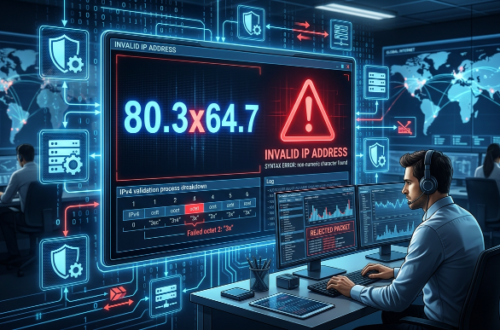
However, this specific sequence is technically invalid because IPv4 rules only allow numbers between 0 and 255 in each section. Since the last segment “284” exceeds this limit, it cannot function as a real IP address in networking systems.
Despite being invalid, such patterns are often seen in logs, tutorials, or content explaining networking concepts. They are commonly used as examples to help users understand how IP addresses are structured.
Understanding IPv4 Address Structure
IPv4 (Internet Protocol version 4) is the most widely used addressing system on the internet. It consists of four numerical blocks separated by dots, such as 192.168.1.1.
Each block represents 8 bits of data, and therefore the value must always remain between 0 and 255. This structure allows around 4.3 billion unique addresses to exist globally.
The format of an IP address is not random. Each section plays a role in identifying networks and devices. The first parts typically represent the network location, while the last part identifies the specific device within that network. This structured system ensures accurate communication across billions of connected devices.
Why 111.90.150.284 is Not a Valid IP Address
The main reason 111.90.150.284 is invalid is due to IPv4 range limitations. Each segment in an IP address must fall within 0–255, and the value “284” violates this rule.
When a system encounters an invalid IP like this, it cannot route data to it because no real device can be assigned such an address. Network routers and servers automatically reject it as an incorrect format.
In real-world systems, invalid IPs often appear due to:
incorrect data entry
software formatting errors
log file corruption
or artificial examples used for educational purposes
Therefore, while the format looks real, it does not exist in actual internet infrastructure.
How Real IP Addresses Work in Internet Communication
Real IP addresses are essential for enabling communication between devices on the internet. Every time you open a website, send a message, or stream a video, your device interacts with servers using IP-based routing.
The process works in a structured way. First, your device sends a request to a domain name system (DNS), which converts website names into IP addresses. Then routers across the internet guide the data packets toward the correct destination using those IP addresses.
Finally, the server receives the request and sends back the required information. This entire process happens in milliseconds, making global communication seamless and efficient.
Without IP addresses, the internet would not function because devices would have no way to locate each other.
Common Reasons You Might See 111.90.150.284 Online
Even though 111.90.150.284 is invalid, similar patterns often appear in digital environments. There are several reasons for this.
Sometimes, developers use fake IP addresses in tutorials or documentation to demonstrate networking concepts. These examples help learners understand structure without exposing real system data.
In other cases, software logs or system errors may generate incorrect values due to formatting issues or corrupted data fields. This can make it look like an actual network address when it is not.
Additionally, some online content uses random IP-like numbers to discuss cybersecurity topics or network behavior in a simplified way.
IP Addressing and Its Role in Networking
IP addresses play a fundamental role in global communication systems. They act like digital home addresses for devices connected to the internet.
Whenever data is sent across networks, it must contain a source IP and a destination IP. These identifiers ensure that information reaches the correct device without confusion.
Routers use IP addresses to determine the best path for data transmission. This system allows billions of devices to communicate efficiently across continents.
Without structured IP addressing, the modern internet would not be able to function at its current scale.
Security and Misconceptions About IP Addresses
Many users mistakenly believe that any IP address they see online can be used to track or identify a person directly. In reality, IP addresses only identify networks or devices, not individuals.
For example, a public IP may represent an entire organization, a mobile carrier, or a shared network. It does not directly reveal personal identity without additional legal and technical processes.
Another misconception is that random or invalid IP-like numbers indicate hacking or cyber threats. In most cases, they are harmless examples or system-generated placeholders.
Understanding this distinction is important for avoiding unnecessary panic or misinformation about network security.
Differences Between Real and Fake IP Addresses
A real IP address always follows strict formatting rules and falls within valid numerical ranges. It is assigned by Internet Service Providers (ISPs) and is actively used in network communication.
Fake or invalid IP addresses, like 111.90.150.284, break these rules and cannot function in real networking systems. They are often used for testing, teaching, or illustrative purposes.
The key difference lies in usability: real IPs enable communication, while invalid ones are non-functional representations of the format.
The Importance of Understanding IP Address Formats
Understanding IP address structure is essential for anyone interested in networking, cybersecurity, or technology. It helps users recognize how data flows across the internet and how devices are identified globally.
It also helps in identifying errors in system logs or configurations. When users understand what valid and invalid IP formats look like, they can better analyze technical information and avoid confusion.
As digital systems continue to expand, knowledge of IP addressing becomes even more important in fields like cloud computing, networking, and cybersecurity.
Conclusion
111.90.150.284 is not a real or valid IP address, but it closely resembles the IPv4 format used in global networking systems. Its structure helps explain how IP addresses are designed, even though it cannot function in real-world communication due to an invalid numerical value.
By understanding why this sequence is incorrect, users can better grasp how real IP addresses work, how data travels across the internet, and how devices are uniquely identified in global networks.