Introduction to 111.90.150.2404 and Its Digital Context
The string “111.90.150.2404” appears at first glance like an Internet Protocol (IP) address, but it does not conform to standard networking rules used across the global internet. In modern digital systems, IP addresses play a crucial role in identifying devices, routing traffic, and enabling communication between servers, users, and services. However, when an IP-like format contains invalid values, such as in this case, it often indicates a misconfiguration, data entry error, or misunderstanding of how IP addressing works.
Understanding such values is important not only for developers and network engineers but also for general users who interact with websites, applications, and online platforms. The keyword “111.90.150.2404” is often associated with searches related to IP lookup, tracing, or SEO content creation, but technically it represents an invalid IPv4 format. In this article, we will explore its structure, why it is incorrect, and what it reveals about networking principles and digital communication systems.

Understanding the Basics of IPv4 Addressing System
The IPv4 addressing system is one of the core technologies that enables devices to connect to the internet. It consists of a 32-bit numeric format divided into four sections called octets, separated by dots. Each octet can range from 0 to 255, forming a valid structure like 192.168.1.1 or 8.8.8.8. These addresses are assigned to devices either dynamically or statically, allowing them to communicate across networks.
Every time a user accesses a website, sends an email, or streams content, an IP address is involved in the background routing process. This system ensures that data packets reach the correct destination without confusion. Because of its strict structure, even a small deviation from the valid format makes an IP address unusable within real networking environments.
Why 111.90.150.2404 Is Not a Valid IP Address
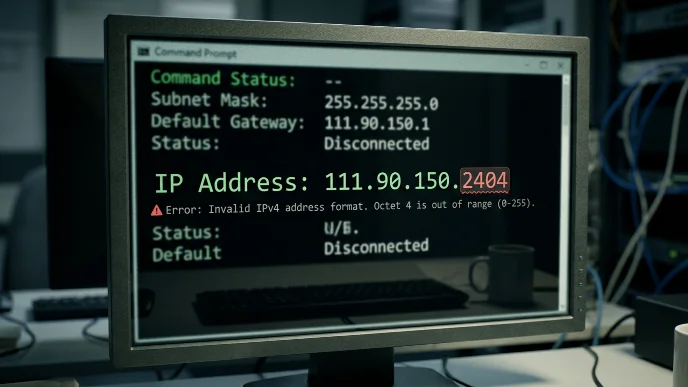
The sequence “111.90.150.2404” breaks the fundamental rules of IPv4 formatting. The issue lies in the last segment, “2404,” which exceeds the maximum allowed value of 255 for any octet. Since IPv4 addresses must contain four numeric blocks ranging from 0 to 255, this format is automatically rejected by networking systems.
This kind of invalid IP often appears due to typographical errors, data corruption, or incorrect parsing of digital logs. In some cases, software systems that handle large datasets or logs may incorrectly generate or display such values when handling malformed input. Because of this, the system cannot route or recognize it as a valid endpoint on the internet.
Common Reasons Behind Invalid IP Formats
Invalid IP-like values such as “111.90.150.2404” usually originate from human or system-level errors. One of the most common causes is manual data entry mistakes, where an extra digit is added unintentionally. Another frequent reason is log file corruption, where system outputs become misaligned or improperly formatted during processing.
In software development, bugs in string parsing or serialization can also produce malformed IP addresses. When systems convert numeric data into text without proper validation, unexpected formats may appear. Additionally, some malicious scripts or manipulated data sets may intentionally inject invalid values for testing or obfuscation purposes.
Technical Implications of Incorrect IP Address Formats
When an invalid IP address like “111.90.150.2404” appears in a system, it can lead to several technical issues. Networking tools and servers rely on strict validation rules, so such an entry is typically rejected immediately. However, if not handled properly, it may still cause errors in logs, analytics systems, or firewall configurations.
In larger systems, repeated invalid entries can create noise in monitoring tools, making it harder for administrators to identify real threats or actual network activity. This is why validation mechanisms are essential in every layer of software that deals with IP data. Proper formatting ensures system stability and accurate data interpretation.
Cybersecurity Perspective on Malformed IP Entries
From a cybersecurity standpoint, malformed IP addresses like this can sometimes be used in obfuscation attempts. Attackers may insert incorrect or fake IP values into logs or requests to confuse monitoring systems or evade detection. While “111.90.150.2404” itself is not harmful, its presence in logs may indicate either a misconfiguration or an attempt to manipulate data visibility.
Security systems are designed to filter and validate incoming data to prevent such anomalies from affecting analysis. Intrusion detection systems and firewalls often rely on strict IP validation rules to ensure only legitimate traffic is processed. Therefore, identifying and filtering invalid IP formats is a key part of maintaining digital security hygiene.
How Systems Validate IP Addresses in Real Time
Modern systems use validation algorithms to ensure that every IP address follows correct formatting rules. When a user submits or a system generates an IP-like value, software checks whether each octet falls within the acceptable range. If any segment exceeds the limit or contains invalid characters, the system rejects it immediately.
This validation process is implemented across different layers, including web servers, databases, and network monitoring tools. Programming languages also provide built-in functions and libraries that automatically validate IP addresses. These mechanisms prevent malformed entries like “111.90.150.2404” from being used in operational environments.
Troubleshooting Errors Related to Invalid IP Data
When developers or network administrators encounter invalid IP formats, the first step is usually to trace the source of the data. This involves checking application logs, input forms, or system integrations that may be generating or transmitting incorrect values. Identifying the origin helps prevent recurring issues in the system.
Another important step is implementing stricter validation rules at the input level. By ensuring that only properly formatted IP addresses are accepted, systems can avoid processing errors downstream. In some cases, cleaning or sanitizing existing datasets may also be required to remove corrupted or invalid entries that could interfere with analysis.
Importance of Proper IP Formatting in Digital Systems
Correct IP formatting is essential for the smooth functioning of digital communication systems. Without standardized rules, the internet would not be able to route data accurately between billions of devices worldwide. Even a single incorrect value, such as “111.90.150.2404,” highlights the importance of precision in network configurations.
From web hosting to cybersecurity, every digital process depends on accurate IP identification. Proper formatting ensures that systems remain reliable, scalable, and secure. It also helps developers build robust applications that can handle data efficiently without unexpected failures caused by invalid inputs.
Conclusion on 111.90.150.2404 and Its Technical Meaning
The keyword “111.90.150.2404” represents an invalid IP address format that violates the fundamental rules of IPv4 addressing. While it does not correspond to any real device or location on the internet, it serves as a useful example of how strict formatting rules govern digital communication systems.
Understanding why such values are invalid helps clarify how the internet functions at a technical level. From validation mechanisms to cybersecurity practices, every aspect of networking depends on precision and structure. Ultimately, this highlights the importance of accurate data handling in maintaining the reliability and security of modern digital infrastructure.