Introduction
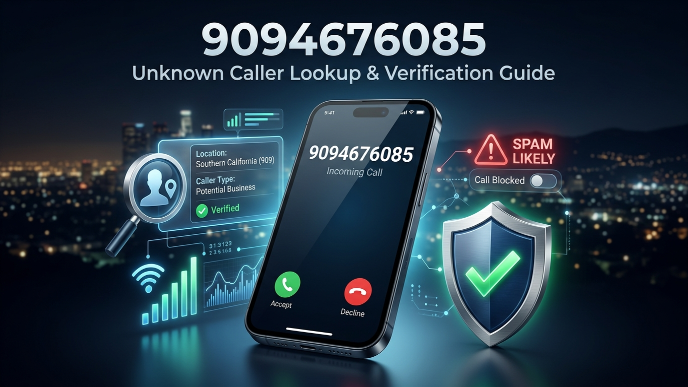
Receiving a call from an unfamiliar number can be confusing, especially when the caller does not leave a message or repeatedly attempts to make contact. One number that has generated online interest is 9094676085. Many people search for this number because they want to know whether it belongs to a legitimate caller, a business, a telemarketing service, or a potential scam operation. As unwanted calls continue to increase worldwide, phone number searches have become an important tool for protecting privacy and making informed decisions.
The number 9094676085 follows the standard North American telephone numbering format and is associated with the 909 area code, which primarily serves parts of Southern California. While publicly available records do not provide a verified owner for this specific number, understanding how phone numbers work, how caller identification systems operate, and how reverse phone lookup services gather information can help users better evaluate unknown calls. Reverse phone lookup platforms are widely used to identify callers, determine spam risk, and verify communication sources.
Understanding the 909 Area Code
The 909 area code is one of the established telephone area codes within California. It primarily serves communities in San Bernardino County and surrounding regions. Due to population growth and increasing demand for telephone services, this area code has remained an important part of Southern California’s telecommunications infrastructure for many years.
Area codes help identify the original geographic region assigned to a phone number. However, modern telecommunications technology has changed the relationship between phone numbers and physical locations. Mobile number portability allows users to keep their phone numbers even when moving to a different city or state. Internet-based calling systems also make it possible for individuals and businesses to operate from locations far away from the area code associated with their number.
For this reason, the presence of a 909 area code does not necessarily indicate where a caller is currently located. Instead, it provides general information about the number’s original assignment within the North American Numbering Plan system.
Why People Search for 9094676085
People typically search for a phone number after receiving a missed call, voicemail, text message, or repeated contact attempt. Curiosity is often the first reason, but concerns about fraud, spam calls, telemarketing campaigns, and robocalls also motivate users to investigate unfamiliar numbers.
The rise of scam calls has changed consumer behavior significantly. Many people no longer answer calls from unknown numbers without first verifying the caller’s identity. This cautious approach helps reduce exposure to phishing attempts, identity theft schemes, and fraudulent financial requests.
In some cases, unknown numbers belong to legitimate organizations such as healthcare providers, delivery companies, customer support departments, or financial institutions. Because important calls can originate from unfamiliar numbers, researching a caller before responding has become a practical habit for many consumers.
How Reverse Phone Lookup Services Work
Reverse phone lookup services are designed to help users identify unknown callers by searching publicly available databases and telecommunications records. Instead of searching for a person’s phone number using their name, reverse lookup systems work in the opposite direction by attempting to identify information associated with a phone number.
These platforms gather information from public records, carrier databases, user reports, business listings, and other legally accessible sources. Depending on data availability, a reverse phone lookup may reveal details such as carrier information, geographic location, line type, and caller reputation. Some services also include spam indicators and community-generated feedback.
The amount of information available varies significantly between numbers. Some numbers generate detailed reports, while others reveal little or no identifiable information. Privacy laws, carrier restrictions, and database limitations all influence the level of detail accessible through reverse lookup systems.
Common Reasons Someone May Receive a Call From 9094676085
There are many legitimate reasons why a person may receive a call from a number such as 9094676085. Businesses frequently contact customers regarding appointments, account updates, service notifications, billing inquiries, customer support requests, and delivery confirmations. Organizations often use multiple outbound phone lines, making unfamiliar numbers a normal part of modern communication.
Automated communication systems are also widely used across industries. Medical offices may send appointment reminders, schools may provide emergency notifications, and service providers may contact customers regarding account activity. These calls often originate from numbers that recipients do not recognize.
At the same time, telemarketing companies and automated dialing systems generate millions of outbound calls each day. Because legitimate and unwanted calls often use similar technologies, determining a caller’s intent requires careful evaluation rather than assumptions based solely on the phone number itself.
Recognizing Potential Spam and Scam Calls
Unknown numbers do not automatically indicate fraudulent activity. However, understanding common scam tactics helps consumers identify suspicious behavior before sharing information or taking action. Many scam calls rely on urgency, fear, and emotional pressure to influence decision-making.
Fraudulent callers often claim that immediate action is necessary to prevent financial loss, account suspension, legal consequences, or security issues. These tactics are designed to discourage verification and encourage impulsive responses. Legitimate organizations generally provide opportunities for customers to verify information independently.
Requests for sensitive information are another important warning sign. Reputable companies rarely ask customers to disclose passwords, authentication codes, complete banking credentials, or government identification numbers during unsolicited phone calls. Consumers should remain cautious whenever a caller requests confidential information without prior verification. General caller identification and scam detection resources consistently recommend verifying unknown callers before sharing personal data.
The Role of Caller ID and Call Screening Technology
Caller identification technology has evolved significantly over the past decade. Modern smartphones, telecommunications providers, and third-party applications use advanced databases and machine learning systems to classify incoming calls and identify potential spam activity.
Caller ID services analyze historical call patterns, user reports, carrier information, and reputation scores to help users understand who may be contacting them. Many platforms can automatically label calls as potential telemarketing, robocall, or spam communications based on community feedback and data analysis.
Despite these advances, caller identification technology is not perfect. Scammers frequently change phone numbers, use caller ID spoofing techniques, and exploit legitimate telecommunications infrastructure. As a result, technology should be viewed as a helpful tool rather than a complete solution. Human judgment remains an essential part of phone security.
Protecting Your Personal Information
Personal information is one of the most valuable assets targeted by phone scammers. Identity theft, account takeovers, and financial fraud often begin with information gathered through seemingly harmless conversations. For this reason, consumers should exercise caution whenever speaking with unknown callers.
Sensitive information such as passwords, banking details, account numbers, authentication codes, and government-issued identification numbers should never be shared with unverified callers. Even partial information can sometimes be combined with publicly available data to facilitate fraudulent activity.
Strong privacy habits provide significant protection against phone-related scams. Taking time to verify a caller’s identity, avoiding emotional decision-making, and refusing to disclose confidential information during unexpected calls can dramatically reduce personal risk.
How to Verify the Legitimacy of a Caller
Verification is one of the most effective methods for determining whether a call is legitimate. If a caller claims to represent a company, financial institution, government agency, or service provider, the safest approach is to independently confirm the organization’s contact information.
Rather than relying on information provided during the call, consumers should visit the organization’s official website and use verified contact details to initiate a separate conversation. This process ensures communication occurs directly with authorized representatives and eliminates many common impersonation scams.
Voicemail messages can also provide useful clues. Legitimate callers often leave clear messages explaining the reason for their call and providing official contact information. Although not every legitimate caller leaves a voicemail, detailed messages generally improve transparency and make verification easier.
The Growing Importance of Phone Number Awareness
As communication technology continues to evolve, phone number awareness has become an important aspect of digital literacy. Consumers today receive calls from businesses, healthcare providers, financial institutions, delivery companies, and automated notification systems on a regular basis. Understanding how phone numbers function helps individuals navigate this environment more confidently.
Public awareness regarding robocalls, spam calls, and social engineering tactics has increased substantially. Educational resources, reverse lookup services, caller identification applications, and consumer protection initiatives all contribute to safer communication practices. Many caller identification platforms encourage users to review unknown numbers before engaging with unfamiliar callers.
Knowledge remains one of the strongest defenses against fraud. Individuals who understand how caller verification works are better equipped to recognize suspicious activity and avoid becoming victims of deceptive communication strategies.
Conclusion
The phone number 9094676085 is a standard North American telephone number associated with the 909 area code region in Southern California. While publicly available sources do not provide verified ownership information for this specific number, understanding reverse phone lookup systems, caller identification technologies, and phone security best practices can help individuals evaluate unknown calls more effectively.
Unknown calls are not necessarily dangerous, but they should be approached thoughtfully. Reverse phone lookup services, caller identification tools, and independent verification methods provide valuable assistance when determining whether a caller is legitimate. By maintaining awareness, protecting personal information, and verifying unfamiliar contacts, consumers can confidently navigate modern telecommunications while minimizing exposure to fraud and unwanted calls.
In a world where digital communication continues to expand, informed decision-making remains the most effective strategy for handling unknown phone numbers. Whether a call from 9094676085 turns out to be a legitimate contact or simply an unwanted solicitation, understanding the principles of caller verification and phone security helps ensure safer and more confident communication.